Our Local Dive Sites On And Off The Map
There’s nothing like having an underwater paradise all to yourself...
The best part about skipping the Cancun crowds? The elbow room down below. Take the plunge into deep wrecks, coral gardens, and the secret spots we don’t share with anyone else.

“We did the Long Weekend (reef dives, night dive, Cozumel) diving package with Wet Set, along with a refresher [...] We dove a site on the wall and managed to do a wreck, which was awesome [...] For our other dives we dove with Juan, who has dove over 6000(!!!) times, and he took great care of us!”
— ★★★★★ TripAdvisor Reviewer

Our Local Dive Sites On And Off The Map
There’s nothing like having an underwater paradise all to yourself...
The best part about skipping the Cancun crowds? The elbow room down below. Take the plunge into deep wrecks, coral gardens, and the secret spots we don’t share with anyone else.
“We did the Long Weekend (reef dives, night dive, Cozumel) diving package with Wet Set, along with a refresher [...] We dove a site on the wall and managed to do a wreck, which was awesome [...] For our other dives we dove with Juan, who has dove over 6000(!!!) times, and he took great care of us!”
— ★★★★★ TripAdvisor Reviewer

Our Local Dive Sites On And Off The Map
There’s nothing like having an underwater paradise all to yourself...
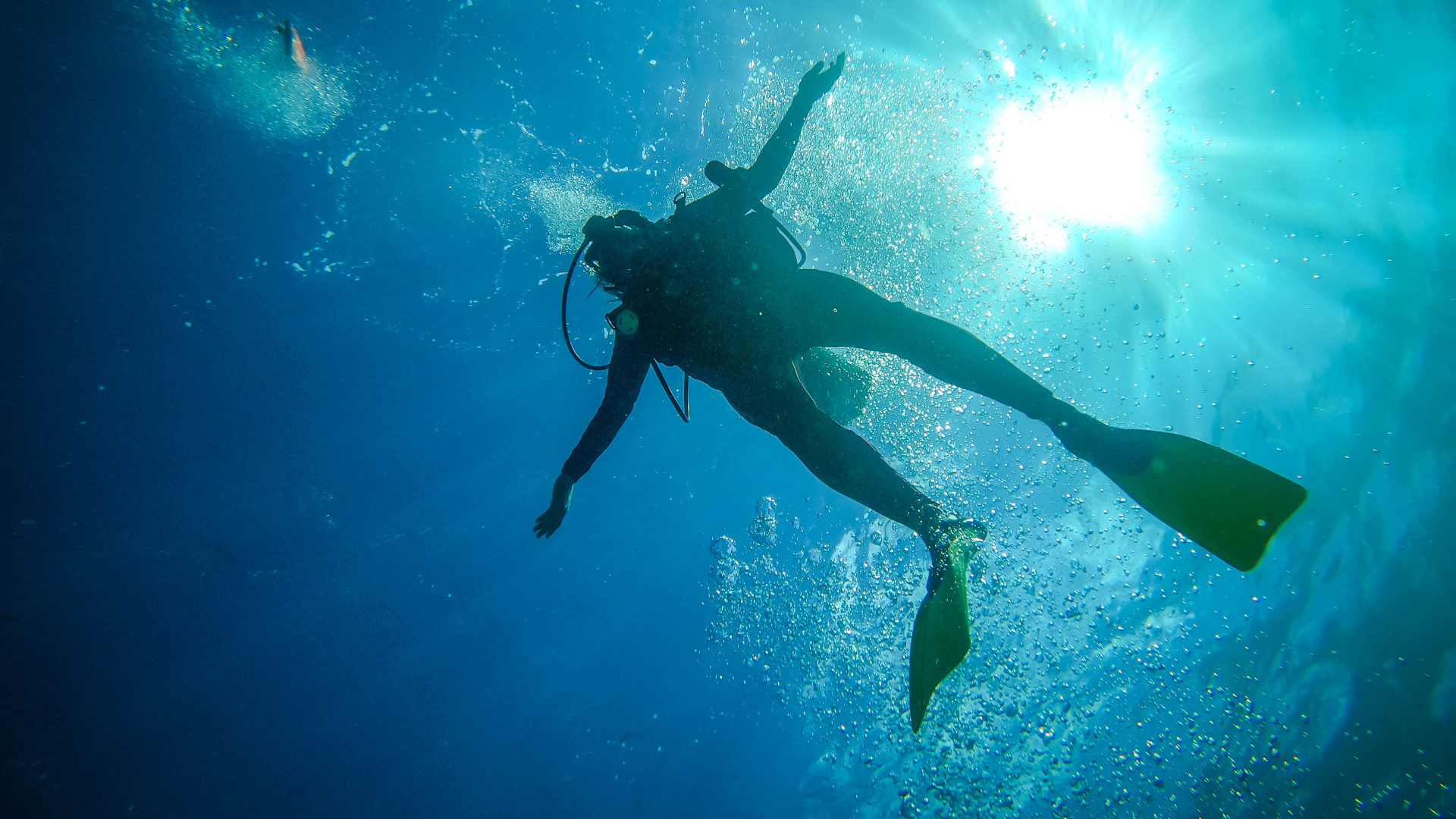
The best part about skipping the Cancun crowds? The elbow room down below. Take the plunge into deep wrecks, coral gardens, and the secret spots we don’t share with anyone else.
We did the Long Weekend (reef dives, night dive, Cozumel) diving package with Wet Set, along with a refresher [...] We dove a site on the wall and managed to do a wreck, which was awesome [...] For our other dives we dove with Juan, who has dove over 6000(!!!) times, and he took great care of us!”
— ★★★★★ TripAdvisor Reviewer
Discover Puerto Morelos Below the Surface
The reef here is part of the world’s second-largest barrier reef and alive with color, calm currents, and endless variety. From shallow coral gardens to deep walls and the legendary C-56 wreck, every dive tells its own story.
These are the sites our team knows best, explored daily, protected carefully... and even some we only share with our clients.
Which Dive Sites Are You Interested In?
⚠️ ATTENTION: We Are Closed Every Sunday
Shallow Reefs (4–10 m / 13–33 ft)
Ojo de Agua — 4.5 m / 15 ft
Just 175 meters from our shop, Ojo de Agua is an easy, shallow dive that reveals one of Puerto Morelos’s best-kept secrets — a coastal cenote flowing straight into the sea.
Here, fresh water rises from the seabed and blends with salt water, creating the shimmering, dreamlike effect locals call the “eye of the water.” Around it, coral heads burst with life — from tiny macro shrimp to sleepy barracuda, and in season, entire schools of baitfish and pompano swirling through the sunlight.
By day it’s calm and full of color. By night, it transforms into one of our favorite after-dark dives, a truly psychedelic experience, just steps from the beach.
Jardines — 4.5 m / 15 ft
Jardines (“The Gardens”) is a quiet, shallow site we visit occasionally — a hidden patch of reef that rewards curious divers.
Located along an L-shaped section of reef, the outer edge can get a bit rough, but the inside is calm and full of life. A broad grassy area stretches along the inner curve, where you’ll often spot trunkfish, juvenile schools of reef fish, and small stingrays or triggerfish feeding in the sand.
It’s a peaceful, easy dive when conditions are right.
Perfect for those who enjoy taking their time and exploring the reef’s smaller, more delicate residents.
Rodman’s Reef — 4.8 m / 16 ft
We pass Rodman’s Reef on the way out to deeper sites, but when conditions are right, it’s worth a stop. This simple, shallow reef offers calm diving and the occasional surprise — from curious nurse sharks resting along the bottom to schools of reef fish weaving through the coral.
Visibility can be limited, which is why we don’t visit it often, but when the water clears, Rodman’s shows a quieter side of Puerto Morelos diving that few others get to see.
Marina Reef — 8.2 m / 27 ft
A favorite for training dives and refreshers, Marina Reef combines easy conditions with a spectacular underwater landscape. Towering coral heads rise from sandy patches to the east, creating natural corridors and several fun swim-throughs that are often packed with fish.
The reef teems with juvenile life along its western edge, while nurse sharks, southern stingrays, and even graceful eagle rays make occasional appearances. It’s calm, colorful, and a perfect place to get comfortable — or just enjoy a relaxed dive surrounded by marine life.
La Pared — 9.1 m / 30 ft
Spanish for “The Wall,” La Pared is our second training site and one of the best places here to spot green turtles. A high limestone wall rises on the east side all the way to the surface; we follow its base along the sandy bottom, with clear navigation and plenty to see.
To the south, a seagrass meadow attracts turtles and large southern stingrays. Head north and you’ll find a cluster of coral heads with great macro life — think scorpionfish tucked in the rubble, sea hares, and cleaner shrimp working anemones. Calm, varied, and predictably lively, La Pared delivers both confidence-building training and memorable wildlife encounters.
Have a question first? Contact Us →
Ready to start exploring the reef?
Mid-Depth Reefs (10–15 m / 33–50 ft)
Fish Market — 11 m / 36 ft
Nicknamed “The Land of 10,000 Grunts,” this site is a true crowd pleaser — a living cloud of movement and color. Huge schools of French grunts swirl so thickly that you can swim right through them as they part and reform just inches from your mask.
Among the coral heads you’ll also find drumfish, clinging crabs, moray eels (all four species have been spotted here), and even the occasional nurse shark, turtle, or passing dolphin. Depending on the current, you might drift north past a coral restoration area or explore a line of sandy holes teeming with marine life.
It’s easy to see why we call it Fish Market — the reef here never stops moving.
Paraiso — 11.2 m / 37 ft
Paraiso means “Paradise,” and this site lives up to its name. It’s a large, varied reef with multiple routes, each one offering a different experience.
One path leads to what we call the Lobster Condo, a ledge packed with a dozen or more Caribbean lobsters sharing the same shelter. Cross a sandy channel and you’ll reach a line of coral heads bursting with moray eels, reef fish, and the occasional school of dolphins passing through the open sand.
Another route winds around the coral ridge, where vertical crevices and overhangs hide an incredible variety of fish and invertebrates. Every dive here feels a little different, and every route lives up to the name Paraiso.
Pez Quad — 13.4 m / 44 ft
Pez Quad gets its name from a group of coral “islands” forming a rough square maze of swim-throughs and holes alive with color and movement. Between the coral mounds, French grunts, squirrelfish, and the occasional green moray gather in the shaded crevices.
After a short, two-minute swim over rubble, a low wall stretches for several hundred meters, filled with shallow caves and ledges where morays and larger reef fish hide. Lionfish sometimes make an appearance, and stingrays are often spotted gliding across the sandy patches to the left.
It’s a meandering, exploratory dive — one that rewards a slow pace and a curious eye.
Finger Reef — 14 m / 46 ft
A maze of coral ridges stretching like fingers across the sand, Finger Reef is packed with holes, ledges, and small caves. It's a dream for divers who love exploring every nook and cranny.
It’s one of the best places around for spotting moray eels, and locals joke about going for the “triple play” (finding three of the four species in a single dive). You’ll almost always see green morays, often a spotted, and sometimes even the rarer types if you look closely.
Nurse sharks occasionally cruise through in daylight, and schools of jacks flash overhead between the coral fingers. Every pass between these ridges feels like discovering a new hidden world.
Have a question first? Contact Us →
Six-Toed Cat — 14.3 m / 47 ft
Named after Hemingway’s famous six-toed cats in Key West, Six-Toed Cat features six long coral ridges that stretch across the sand like a giant paw print.
Similar in structure to Finger Reef, it’s full of holes, crevices, and caves that shelter moray eels, sleeping turtles, and a dazzling mix of reef fish. Pederson shrimp — tiny, electric-blue cleaner shrimp — are everywhere here, and divers sometimes even spot the elusive mantis shrimp darting across the sand.
It’s one of the best sites for seeing multiple types of morays and discovering the hidden life tucked inside every coral ridge.
Aquarium — 14.6 m / 48 ft
We call this one “the site where you never know what you’ll see,” and it earns the name every time. Aquarium is alive with fish in every direction, weaving through coral heads and caves that hide nurse sharks and the occasional green or chain moray.
Seasonally, squid hover in the blue, while schools of jacks sweep through the site like flashes of silver. Once, even a manta ray glided past, a reminder that in this underwater “aquarium,” anything can appear at any moment.
It’s one of our most unpredictable — and unforgettable — dives.
Comfortable In The Water and Ready to See More?
Deep & Advanced (15–20 m / 50–66 ft)
Puente — 18 m / 59 ft
Puente (Spanish for “The Bridge”) takes its name from the enormous coral arch near the end of the ridge, large enough to swim beneath. Beneath the bridge, schools of porkfish and French grunts gather in the filtered light, creating one of the most photogenic scenes in the area.
Following the ridge toward the arch, divers often spot lobsters, clinging crabs, and plenty of familiar reef fish. The site sits deeper and usually follows a gentle current, giving it an easy, natural flow that makes the final swim under the bridge especially memorable.
Grouper Alley — 18 m / 59 ft
A long, sloping ridge that ends in a massive cauldron-shaped depression, Grouper Alley is a deeper site best suited for advanced divers.
Along the ridge and around the bowl, black and Nassau grouper gather in the shadows, often joined by schools of reef fish drifting through the clear water.
The natural amphitheater-like shape of the reef gives this site an almost mysterious feel. Quiet, powerful, and alive with big fish.
Cuevas — 18 m / 59 ft
Meaning “Caves,” this site begins with a series of three short swim-throughs, leading you along a ridge that opens into an underwater island with a massive cave beneath it.
From there, the route winds west, then north, over a chain of ridges dotted with coral heads, small caverns, and plenty of hiding spots to explore. About three-quarters of the way through, you’ll emerge into open water surrounded by large schools of grey snapper, sometimes joined by a passing turtle or southern stingray gliding along the sand.
It’s a site full of texture, motion, and discovery... a diver’s playground of ridges, holes, and caves that live up to its name.
Mesas — 18.6 m / 61 ft
A natural continuation of Cuevas, Mesas gets its name from the broad, table-like coral formations that define the site. Each “mesa” shelters entire communities beneath it — from shrimp and smaller reef fish to the occasional moray tucked under the ledges.
One of the most fascinating sights here is the difference between the compact, cloud-like schools of French grunts and the long, flowing lines of grey snapper moving just above them. \
The contrast gives the reef a mesmerizing sense of motion and balance — a perfect finale to the Cuevas–Mesas circuit.
Already Certified And Craving a Challenge?
Wrecks & Specialty Dives
Shipwreck “Juan Escutia” — C-56 — 28 m / 92 ft
The Juan Escutia, also known as the C-56, is a purpose-sunk World War II minesweeper and the deepest dive in Puerto Morelos — an advanced site for those ready to explore history underwater.
The wreck sits upright and largely intact, resting at 28 meters. Once used by the Mexican Navy for anti-drug patrols, she was intentionally sunk in 1989 along with four sister ships to create artificial reefs across the Riviera Maya.
Today, the C-56 teems with life. Eagle rays often circle the ship (sometimes more than twenty at once), while sardines, porcupinefish, and barracuda swirl around the decks in mesmerizing patterns. Divers can safely swim beneath the helicopter pad, but penetration is restricted to those with formal wreck-diver training.
About 25 meters south of the hull lies a colony of garden eels swaying gently in the sand, completing one of the most spectacular dives in the region.
Cozumel — Drift Diving Adventure
For certified advanced divers, Cozumel offers a completely different kind of experience — exhilarating drift dives along sheer drop-offs that plunge more than a thousand feet into the blue.
The coral structures here are spectacular: towering formations and overhangs carved by decades of current. While there’s less dense marine life than in Puerto Morelos, the dramatic scenery and sense of scale make every moment unforgettable.
We partner with a trusted local operator we’ve worked with for years to run these trips, which include a visit to the Cozumel shipwreck when conditions allow. It’s a full-day excursion, complete with lunch provided and plenty of stories to tell on the ride back.
MUSA — Underwater Museum of Art — 4–12 m / 13–40 ft
Part art installation, part living reef, MUSA — the Museo Subacuático de Arte — is one of the most unique dive experiences in the Caribbean. More than 500 sculpted figures rest on the seafloor, designed to promote coral growth and marine restoration.
Located between Cancún and Isla Mujeres, MUSA features both shallow snorkel areas (4–8 m) and deeper diving sections (up to 12 m) where the statues stand in eerie, photogenic rows covered with sponges and juvenile coral.
While not part of our regular schedule, we can arrange guided trips through our trusted partner operators. It’s a must-see for anyone who loves art, ecology, and the surreal beauty of the underwater world.